
Psychological safety diagnostic tool
Understand psychological safety across your teams and organisation
SCAMPERS is a neuroscience-based diagnostic tool that measures psychological safety, resilience and performance across your teams and organisation. It shows leaders what is working well, and where change can unlock stronger performance, a healthier culture and greater team cohesion.
Grounded in applied neuroscience • Built on the SCARE and MAPS models • Co-created by Dr Fiona Warner-Gale and Paul Chudleigh • Used by the NHS, local authorities, schools and private sector organisations
The problem with most staff surveys
Thriving teams don’t happen by accident
Most staff surveys tell you how engaged or satisfied people are. They rarely tell you what is driving it, or what to change. Organisations end up responding with a blanket initiative or a new policy, and the conditions that shape how people work together stay exactly as they were.
SCAMPERS works differently. It is an online questionnaire that measures the conditions that promote psychological safety, resilience, motivation and effective collaboration. It draws on two applied neuroscience models: SCARE, which maps the brain’s threat and reward responses, and MAPS, which highlights the core drivers of motivation, alignment, purpose and safety. When those conditions are missing, people move into threat, and performance, collaboration and retention all suffer.
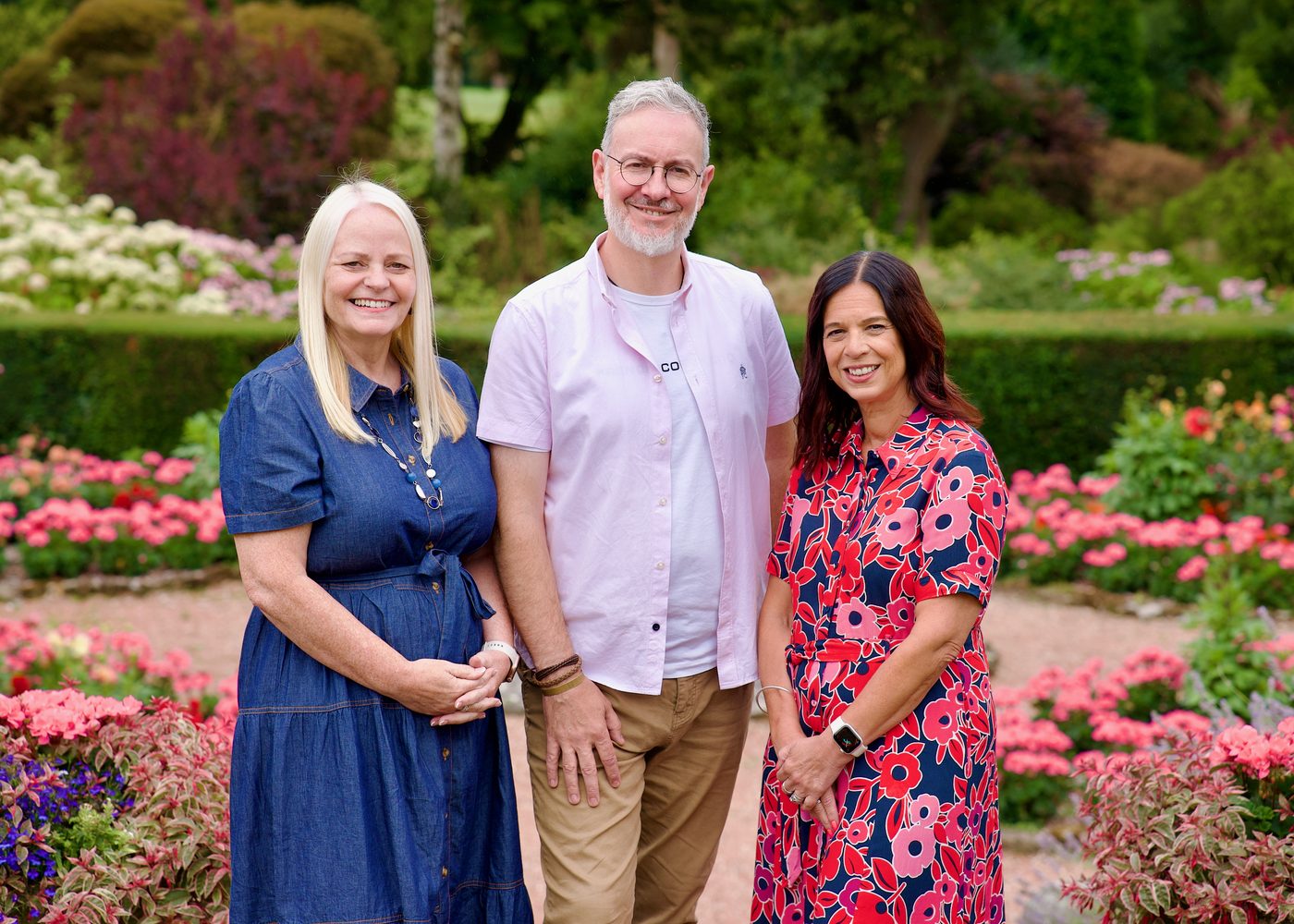
SCAMPERS was co-created by Dr Fiona Warner-Gale and Paul Chudleigh. It has been used by the NHS, local authorities, schools and private organisations in sectors including entertainment, science, FinTech, and oil and mining.
What we measure
The eight conditions behind how a team performs
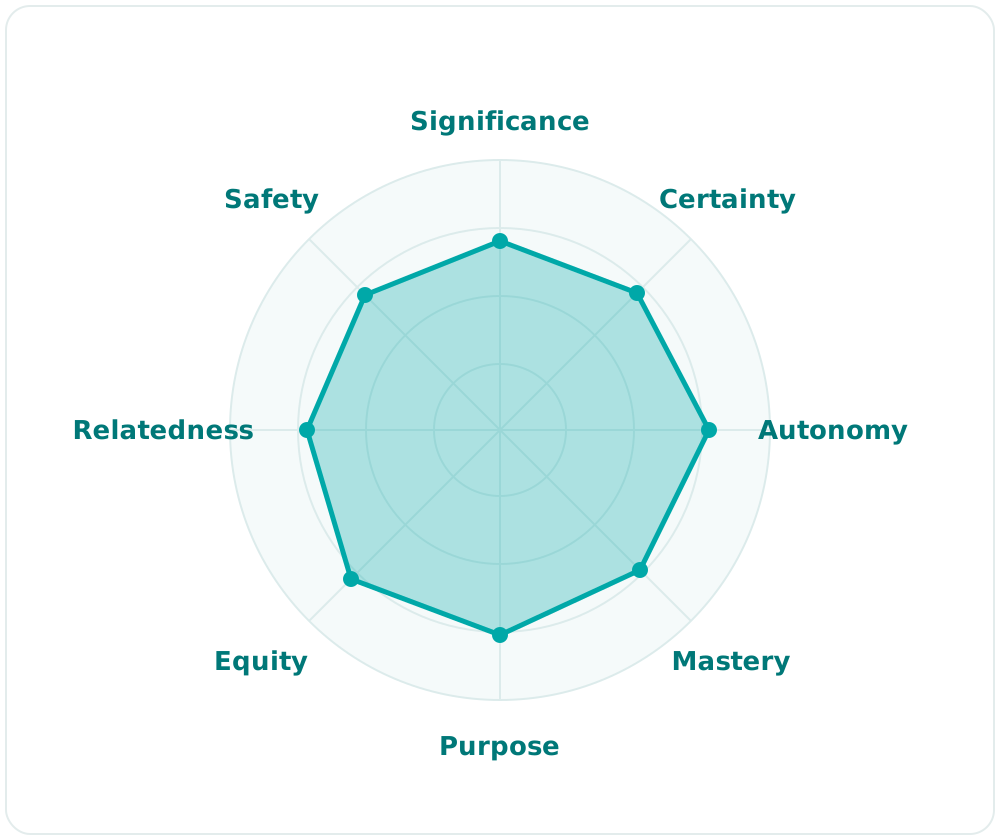
SCAMPERS captures data across eight core domains, with six to eight questions in each. Together they show where your organisation is doing great things and where change would make the biggest difference.
Significance
Feeling highly regarded as someone who adds value.
Certainty
Having clarity about how to be successful in your role.
Autonomy
Being empowered to make your own good choices.
Mastery
Having the skills you need to be great at what you do.
Purpose
Being motivated and passionate about the work you do.
Equity
Believing you work in a fair and merit-based culture.
Relatedness
Being accepted, cared for and supported by colleagues.
Safety
Feeling physically and psychologically safe, even in hard times.
How it works
Three stages, from survey to action plan
Most organisations complete the process in six to eight weeks, with very little demand on your team’s time.
Online survey
Everyone completes the questionnaire online, on a PC, laptop or mobile. They rate the eight domains on a seven-point scale, then answer open questions on what to stop, start and continue, and on the challenges of the past year. It takes around fifteen minutes.
Analysis by team, department or site
Scores are broken down by team, department or site, and by groups such as age or length of service, then compared against the whole organisation. This is where the real differences show up. Every domain is scored to question level.
Feedback and action planning
We give you comprehensive feedback on the results, showing what is working well and where change would have the most impact. You can then opt to have us help develop an action plan, and re-run the survey later to measure the shift.
What you get
A report your leaders can act on, not file
Where it usually leads next
The diagnostic tells you which of the eight domains to work on. From there we can suggest a programme to improve the areas that matter most to you, whether that is manager coaching, psychological safety workshops, our stress and resilience programme or leadership training, and re-run the survey to show the movement.
Case study
A multi-academy trust, six schools and central teams
The trust knew staff were under pressure after a difficult couple of years, but not where to direct its support. We ran SCAMPERS across every school and the central team.
The trust-wide picture
Relatedness scored highest at 5.43 out of 7 and equity lowest at 4.67. People felt supported by their colleagues, but were much less confident that workloads, promotions and decisions were fair.
The averages hid the story
Overall the trust sat at 5.09, a reasonable score. Underneath it, individual schools ranged from 4.61 to 6.19. A single trust-wide plan would have missed the schools that needed help most.
Different problems, different fixes
The biggest challenge varied by site: workload in the central team, mental health in one school, stress at work in another, and covering for new or substitute staff elsewhere. Each needed its own response.
Who it is for
For any organisation that wants evidence before it acts
Whether you are building a high-performing team, embedding psychological safety or navigating change, SCAMPERS gives you a science-backed foundation for your next steps. It works in any sector and at any scale.
Public sector and education
NHS teams, local authorities, schools and trusts, where pressure is sustained, turnover is costly and leaders need to show measurable progress.
Private sector organisations
From FinTech and science to entertainment, oil and mining, where performance, innovation and retention depend on people feeling safe to speak up.
Organisations going through change
After a restructure, merger, period of growth or change of leadership, when it is not yet clear how the change has landed with people.
Who you will be working with
Run by practitioners, not a survey platform
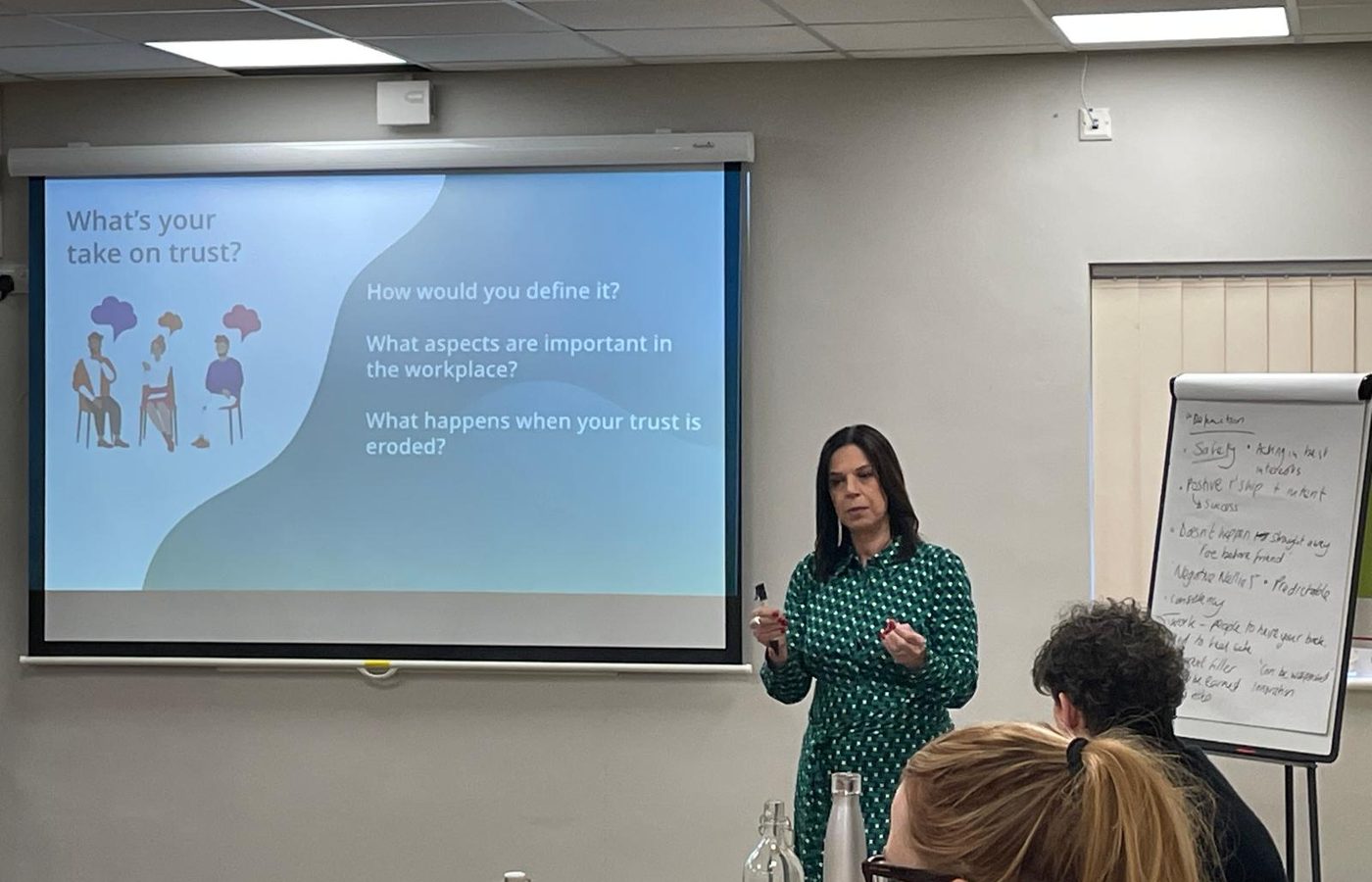
The diagnostic is led by Dr Fiona Warner-Gale, who co-created SCAMPERS with Paul Chudleigh and has spent more than thirty years working on culture, wellbeing and leadership in education and health settings.
You work with the same experts from start to finish. The people who set up your survey are the people who analyse every response, interpret the results in the context of your organisation and present the findings to your leadership team.
Common questions
Before you commit
What is SCAMPERS?
SCAMPERS is an online diagnostic questionnaire that measures the conditions behind psychological safety, resilience, motivation and collaboration in teams and organisations. It was co-created by Dr Fiona Warner-Gale and Paul Chudleigh and is based on two applied neuroscience models, SCARE and MAPS.
Is SCAMPERS a wellbeing survey?
No. SCAMPERS measures psychological safety and the conditions that drive performance across a team or organisation. Improvements in wellbeing often follow, but the focus is on the culture and working conditions leaders can influence.
Is it anonymous?
Yes. Survey responses are confidential and reported at team level, never individually.
How long does the whole process take?
Typically six to eight weeks from launching the survey to receiving your feedback, depending on the size of the organisation and how quickly diaries allow.
How small can an organisation be?
The diagnostic works from a single team upwards. The team-by-team comparison becomes more useful the more sites or departments you have.
Can we repeat it to show progress?
Yes, and we would encourage it. Re-running the survey twelve months on gives you a like-for-like measure of what has shifted.
Start with a conversation
Find out what your scores would tell you
Tell us about your organisation and we will talk you through how the diagnostic would run, what you would get back, and what it would cost.
